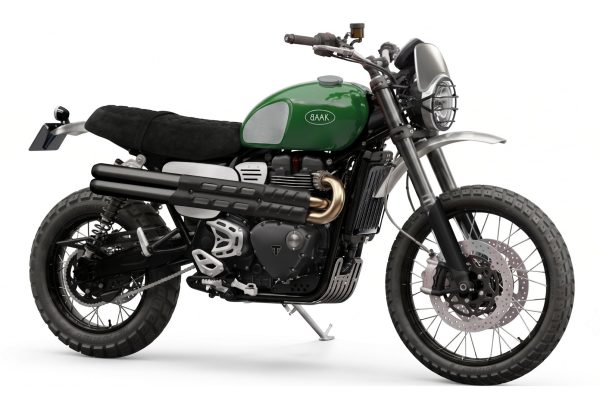
This machine is not finished. It is on the bench, and the parts that make it up arrive one at a time — drawn, fitted, reworked. We chose to talk about it now rather than at the end, because the essential part of the work happens exactly there, between the drawing and the fitted part.
The starting point is a Triumph Scrambler 1200. A solid base, a clear identity, generous proportions — and a set of details that, put end to end, do not quite tell the same story.
The thinking: unify, improve, finish
The work began with observation. Its proportions, its strong lines, its real qualities — and the places where the whole comes apart: volumes that answer each other badly, finishes from different registers, parts that are useful but added on.
Our approach is to reveal another side of the machine, by strengthening its classic character and raising its level of finish. Each BAAK part replaces or completes an existing element, with attention paid to proportion, material and integration. No part is drawn for itself: it is drawn for its place in the whole.
It is a demanding constraint. It forbids adding a part because it is beautiful. It means reworking that part until it holds its place.
What is already fitted
The rear. That is the first job. The rear fender delete kit, together with a short licence plate bracket and a Bates taillight, closes the line and gives the rear wheel back the room it deserves. A rear brake caliper protector finishes the job on the brake side.
The centre. The side covers — made for the original high exhaust line as well as for a low line — calm the area, unify the materials and let the silhouette breathe.
What protects. The Trail engine guard and the pressed aluminium wind deflector complete the machine for the way it is used, without breaking its line. This is the least spectacular part of the work. It is often the part that shows most after three seasons.
The seat. Two designs sit side by side, depending on the intended use: the Heritage leather seat, tighter, and the Adventure leather seat, more welcoming over long stages. Both are made in our workshop.
The cockpit. The Classic round mirrors and the Round turn signals in their LED version take the place of oversized original parts. Two quiet changes, and the whole front of the machine lightens.
For going far. The large rolled leather saddlebag and the large satchel leather saddlebag fit without weighing down the rear line.
The parts already available
Fenders, side covers, engine guard, wind deflector, leather seats: the parts drawn for the Scrambler 1200 X, XC and XE are gathered in a single category.
What is still on the bench
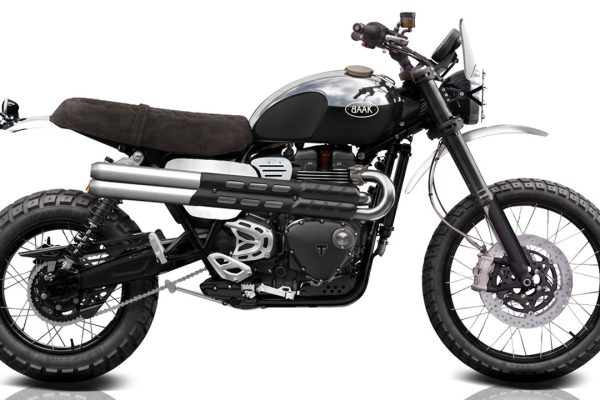
The rest of the composition is under way. We say so plainly, with no date: a part is released when it holds its place, not when the calendar asks for it.
- At the front — a high front fender, to give the front end back its off-road stance, the one of the machines of the sixties and seventies.
- The look — a Classic headlight and its dedicated brackets. Our Classic headlight protection grille already exists; the brackets are still to be drawn for this machine. It is the part that changes its expression the most, and the most demanding to integrate.
- The guards — radiator grille, fork tube protectors, injection covers. None of the radiator grilles in our catalogue fits the Scrambler 1200: this one has to be created.
- The cockpit — a scrambler handlebar and its risers, a leather tank strap.
- The exhaust — a muffler drawn to fit onto the original headers.
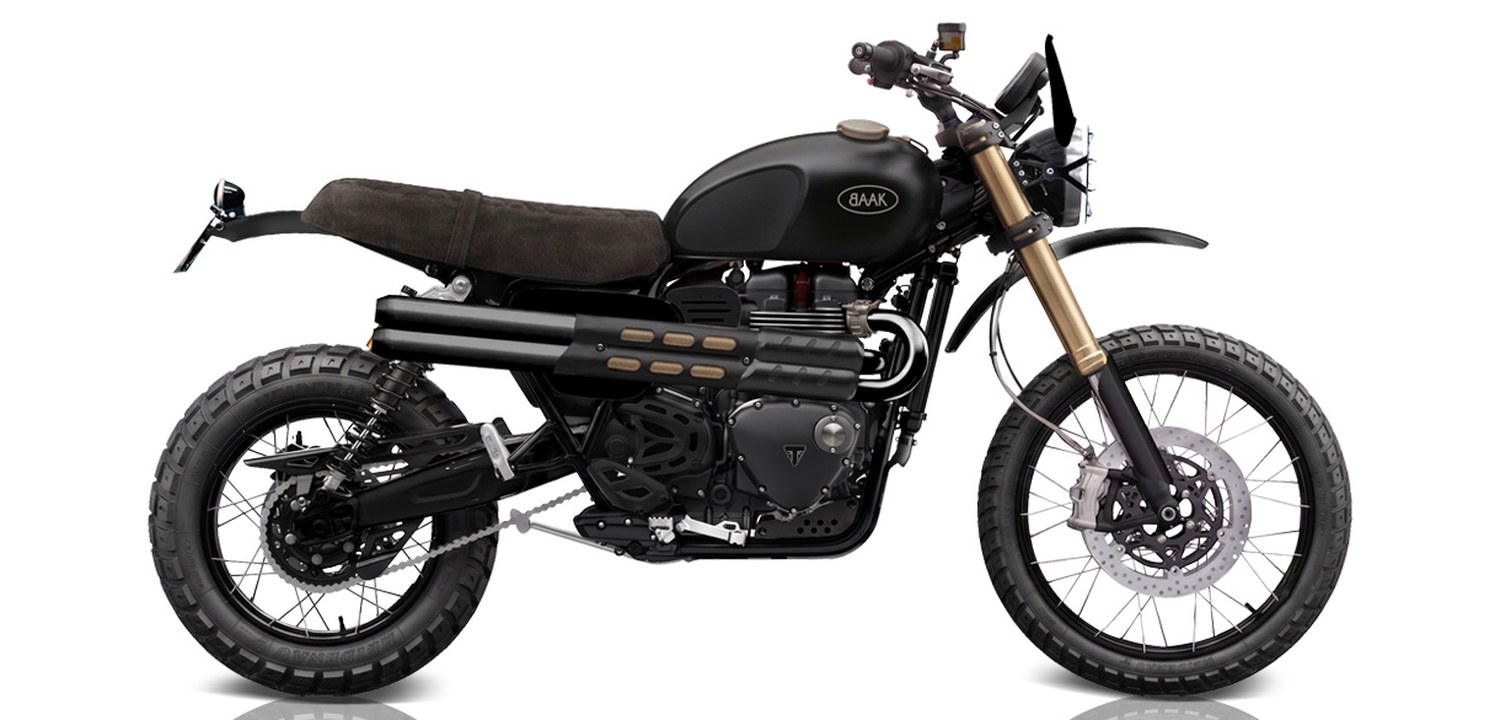
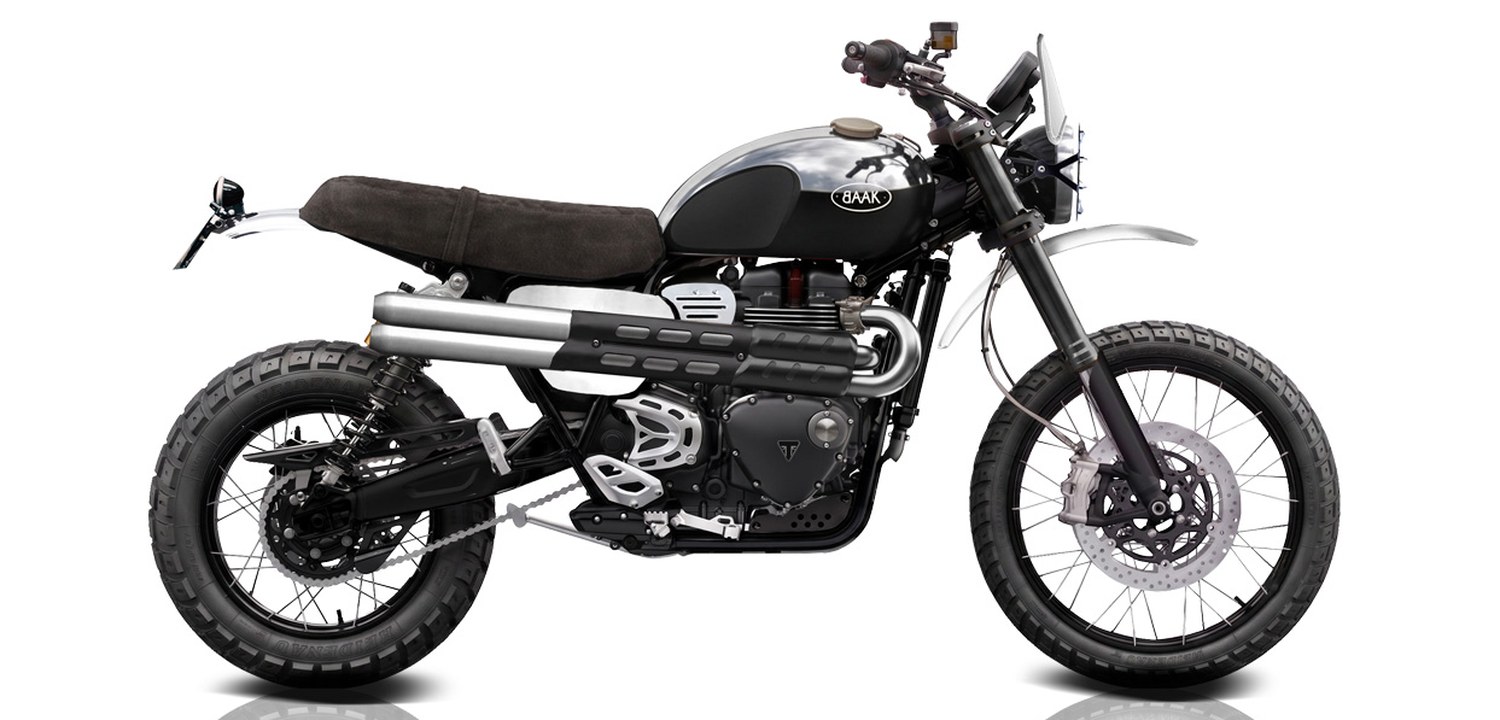
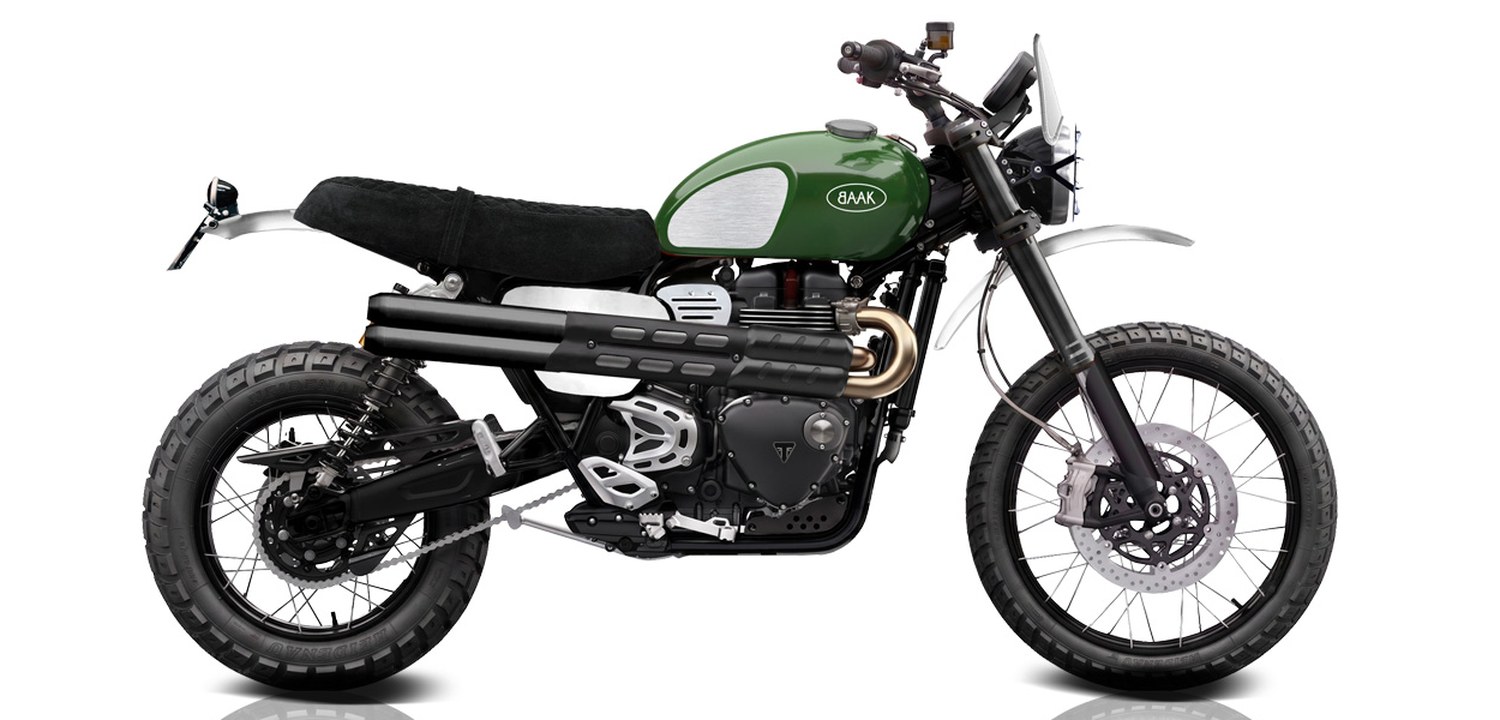
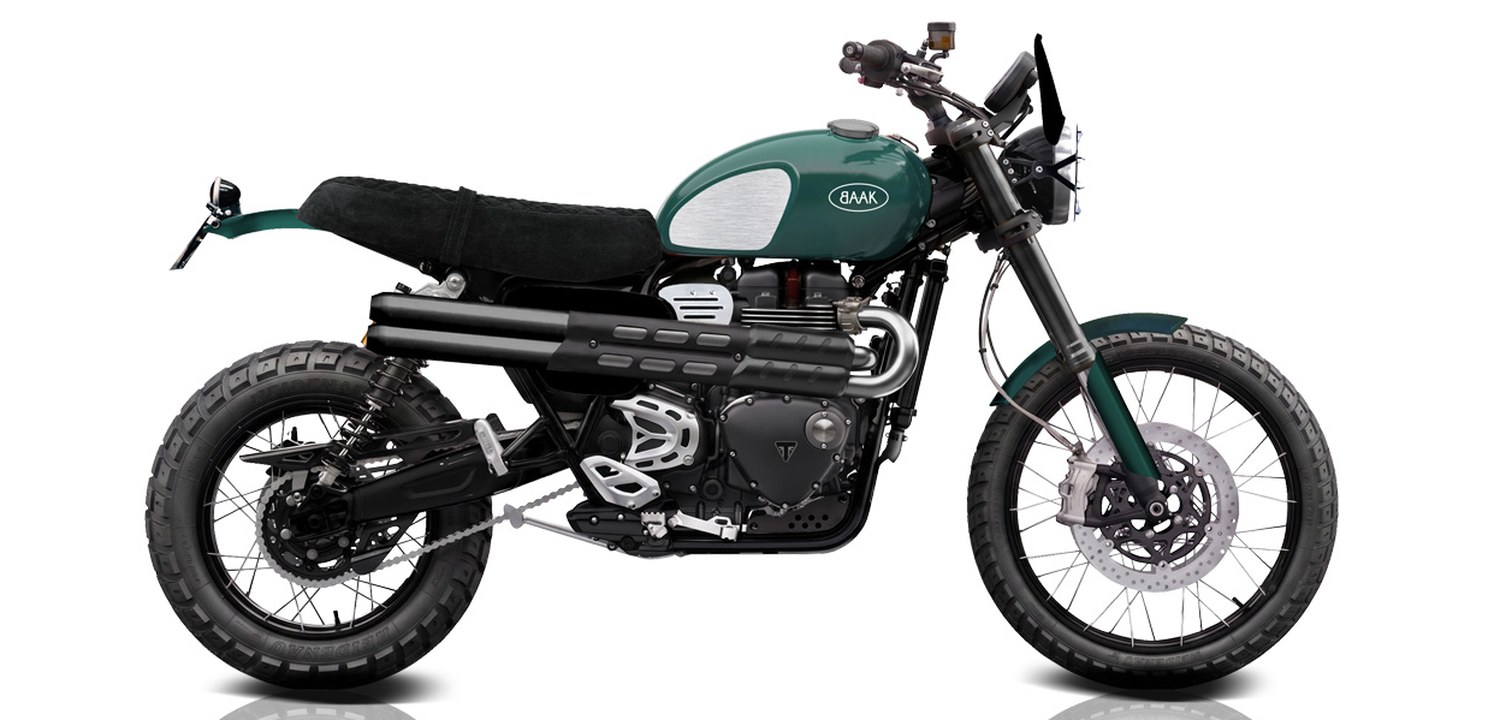
Material, used with restraint
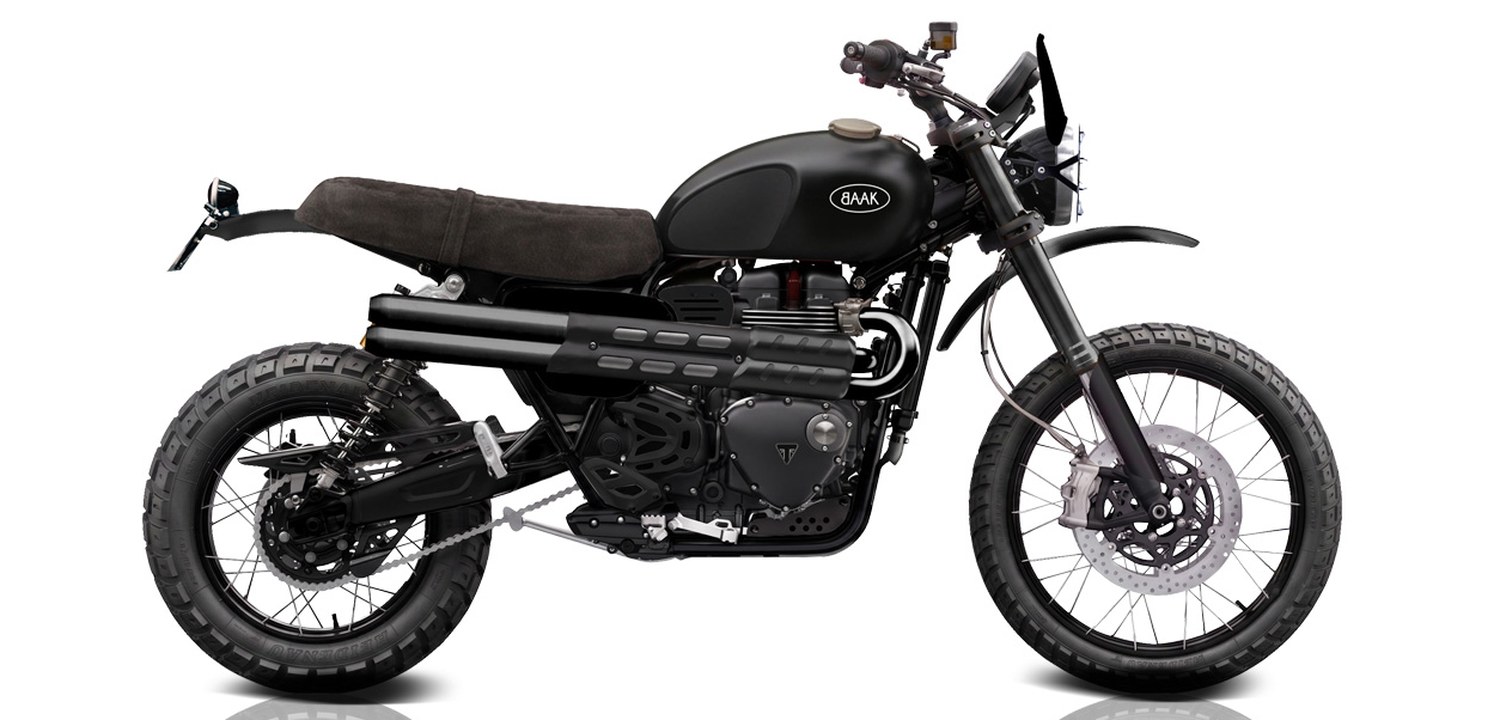
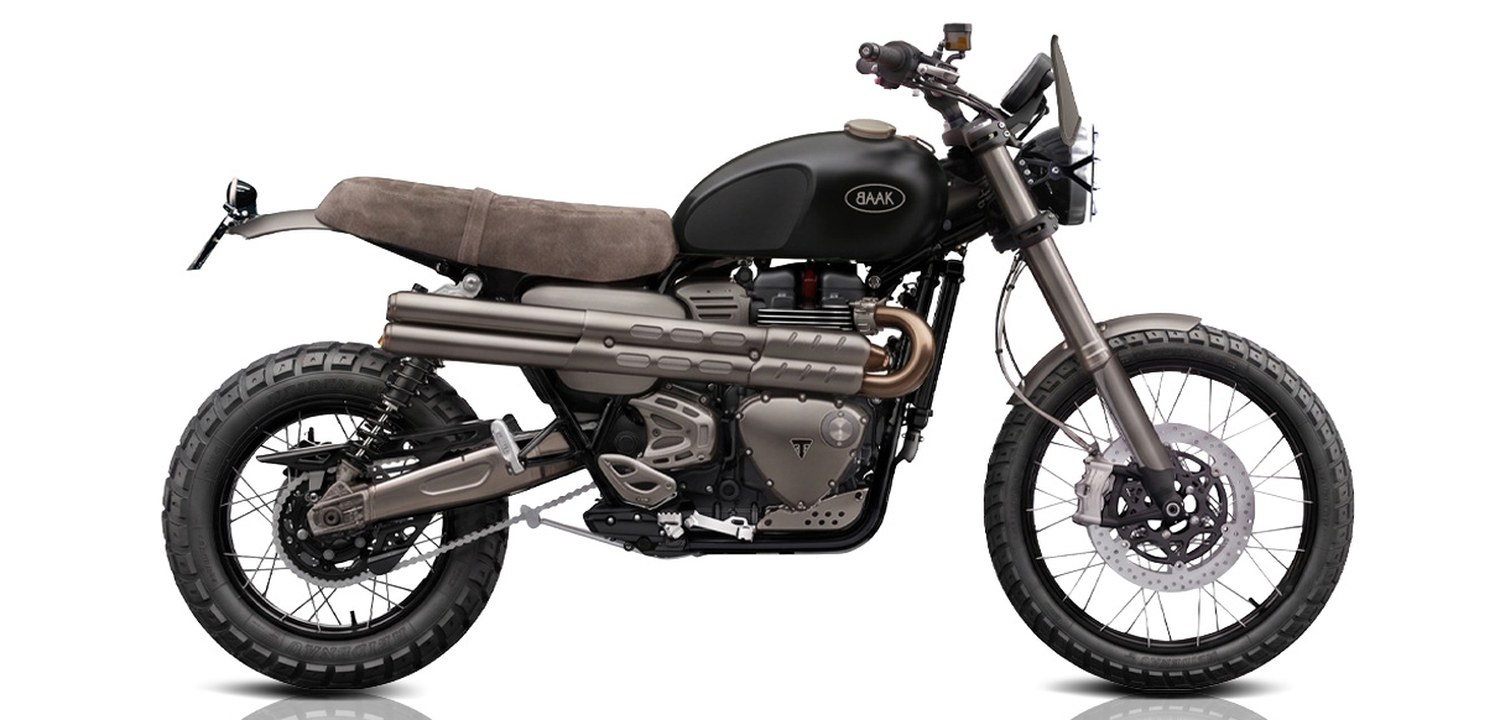
Aluminium, brushed finishes, stainless steel, suede leather and surface treatments give the whole its depth. Never enough to pull the eye towards one part in particular: it is the entire silhouette that has to hold.
Several combinations of finishes make it possible to shift the character of the build. More restrained, or more marked by the inspiration of classic machines — each version keeps what makes the Scrambler 1200, with a finish that is more resolved and more coherent.
What comes next
We will keep this page updated as parts come off the bench: drawings, fitting, decisions. A build is not an addition of parts, it is a choice held to the end — and that choice shows better along the way than once the machine is done.
A machine composed with you
This Scrambler 1200 is a project run for a client, part after part. That is the work of the bespoke department: starting from a machine and an intention, and holding the drawing to the end.